

When a child has a lesson to study, reading the page together is a useful start. The next step is to close the book and ask them to recall one idea in their own words. A few questions, a chance to check the answer, and another short review later can make study time more focused.
A simple three-step routine
1. Read a small part together
Choose one short section of the lesson. Ask your child what it means and clarify unfamiliar words. There is no need to cover the whole chapter at once. For a lesson about plants, you might start with what roots do before moving to stems and leaves.
2. Close the book and ask a question
Ask something your child can answer without looking: “What do roots do?” or “Can you explain that in your own words?” Give them time to think. Then reopen the lesson together to check and fill in anything missing. Getting stuck is useful information about what to practise next, not a reason to turn the moment into a test of worth.

3. Come back to the idea later
At a later study time, ask one or two of the same questions again before opening the book. If an answer is easy, move on. If it is uncertain, revisit that part and try a new example. The goal is to return to important ideas over time, rather than repeat the entire lesson in one sitting.
Is rereading enough?
Rereading helps a child encounter the material, but it does not always show what they can remember without the page in front of them. Asking a question gives both of you a clearer picture. The Institute of Education Sciences practice guide recommends using quizzes to bring key content back to mind and spacing learning over time. Its advice covers elementary grades as well as older students.
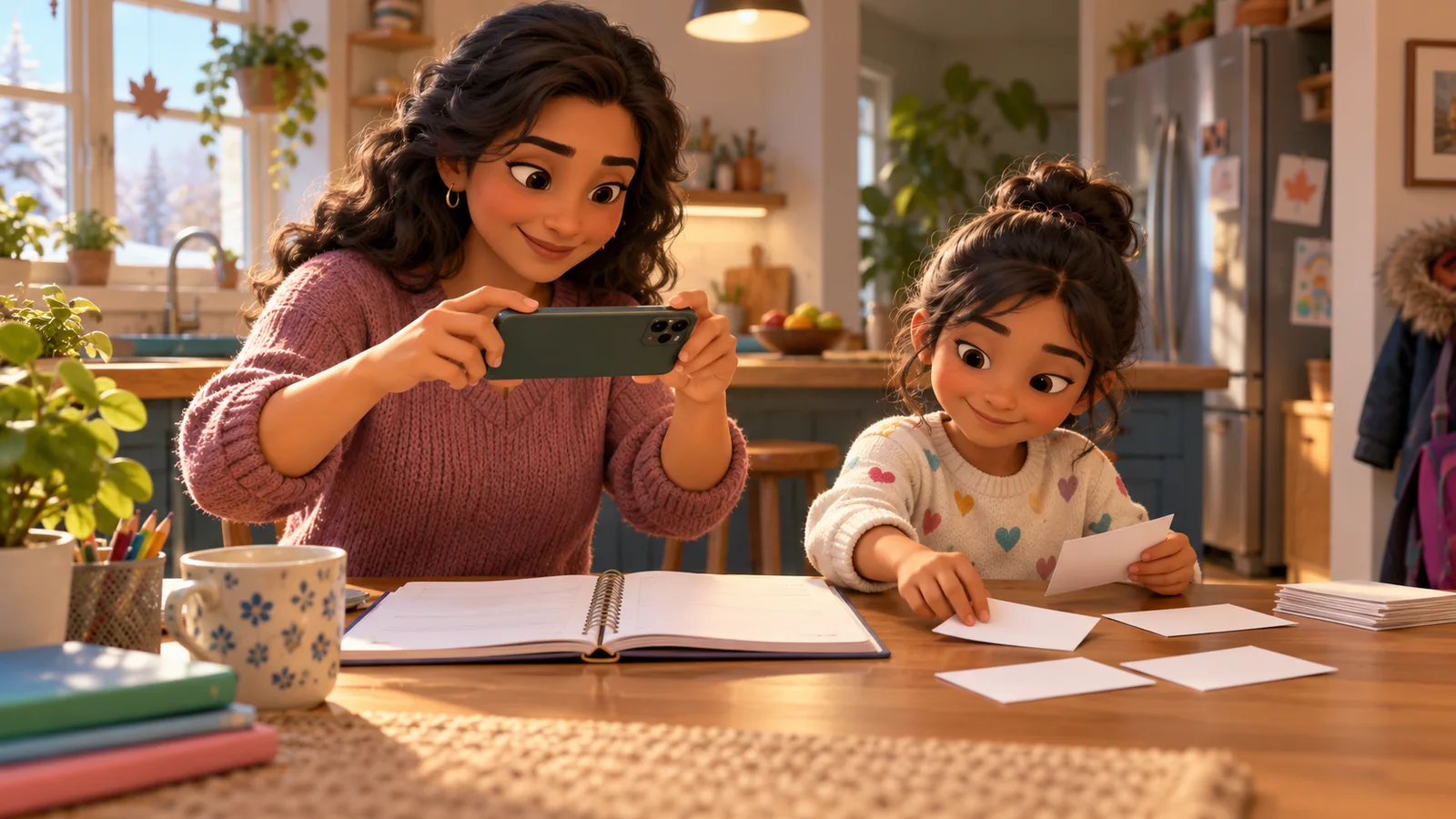
You do not need a formal quiz. A parent can ask three oral questions, use blank cards, or invite the child to draw and explain an answer. The best format is one your child can actually use calmly.
What if my child cannot answer?
Give a small hint, show the relevant sentence, and try again in simpler words. If several questions are hard, reduce the amount of material for that session. You can also ask the teacher which ideas matter most. A short, encouraging exchange is more useful than pushing through a long list when your child is tired.
Make the next review easy to start
Keep two or three questions from today’s lesson for the next study session. Start with those, then add a new question from the current material. If your child enjoys interactive quizzes, Pikoo can turn a photo or entered lesson into practice questions. The parent still chooses the material and can follow what the child practises.
In brief: read a little, ask your child to recall it, check together, and return to the idea later. The routine can fit the lesson and your family’s evening.