
Play can help children learn. The research does not say that every game teaches automatically, or that a fun activity can replace clear explanations and focused practice. The strongest evidence here concerns guided play: an adult has a learning goal in mind while the child retains some choice and room to explore.
What is guided play?
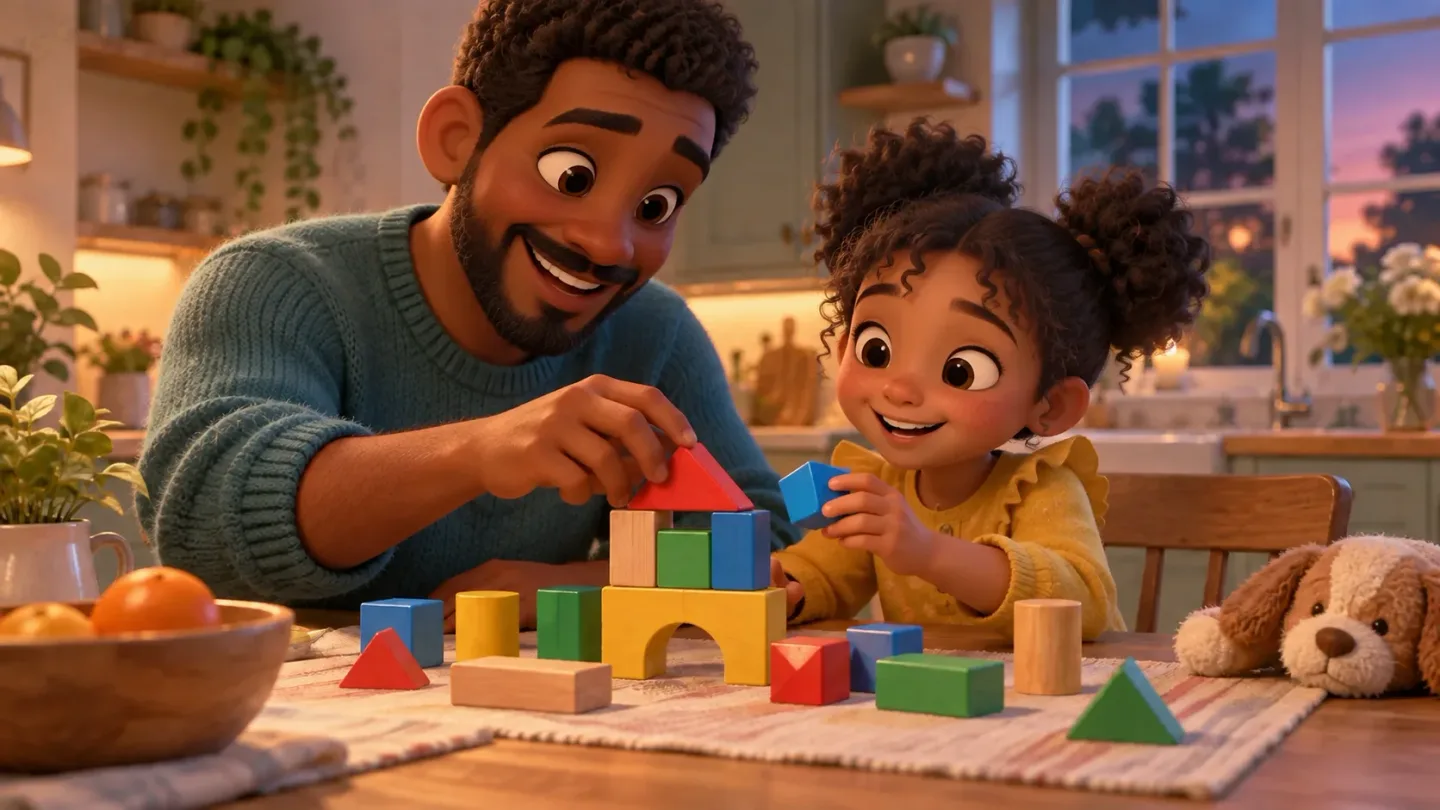
Suppose your child is learning shapes. You invite them to build a house from blocks and ask, “How do you know this piece is a triangle?” They choose pieces and test ideas; you help them name and compare the shapes. The learning goal is clear, but you do not direct every move.
That mix of a goal, some child choice and adult guidance matches the definition in Skene and colleagues’ 2022 review in Child Development. The LEGO Foundation’s review of learning through play also describes playful experiences as joyful, meaningful, mentally active, open to trying again and often social. These qualities are useful design cues, not a checklist every activity must satisfy.
What did the studies find?
Skene and colleagues reviewed 39 guided-play studies and included 17 in meta-analyses. In some comparisons, guided play performed better than direct instruction for early math skills and shape knowledge, and better than free play for spatial vocabulary. The children studied were mainly 1 to 8 years old. These findings concern particular skills and settings; they do not establish that play improves every subject or every school outcome.
The authors also reported methodological limitations in several studies. Their review examined activities with adult guidance, not Pikoo or digital games as a whole. Its findings should not be turned into a numerical promise for an app.
What about playful quizzes?
Guided play and review questions draw on related but different evidence. An Institute of Education Sciences practice guide, which includes elementary grades, recommends using questions to bring key ideas back to mind and spacing practice over time. A question is more useful when a child tries to answer it, gets feedback and revisits an uncertain idea later. A playful format may help a child start; the learning actions still matter.
Try one small activity tonight
Pick one idea from the lesson. Make a short challenge around it: sort shapes, guess a word from clues or explain why an answer is correct. Let your child choose part of the activity. Ask an open question, then check the answer together. At the next study time, return briefly to the same idea. If fatigue or frustration takes over, make the activity shorter.
If your child enjoys interactive quizzes, Pikoo can create practice questions from a lesson supplied by a parent. You can then invite your child to explain an answer in their own words. Pikoo is a practice tool; the studies cited here did not test its specific effectiveness.
In brief: a playful activity is most useful when your child thinks about a specific idea, can try things, gets support and returns to the material later.