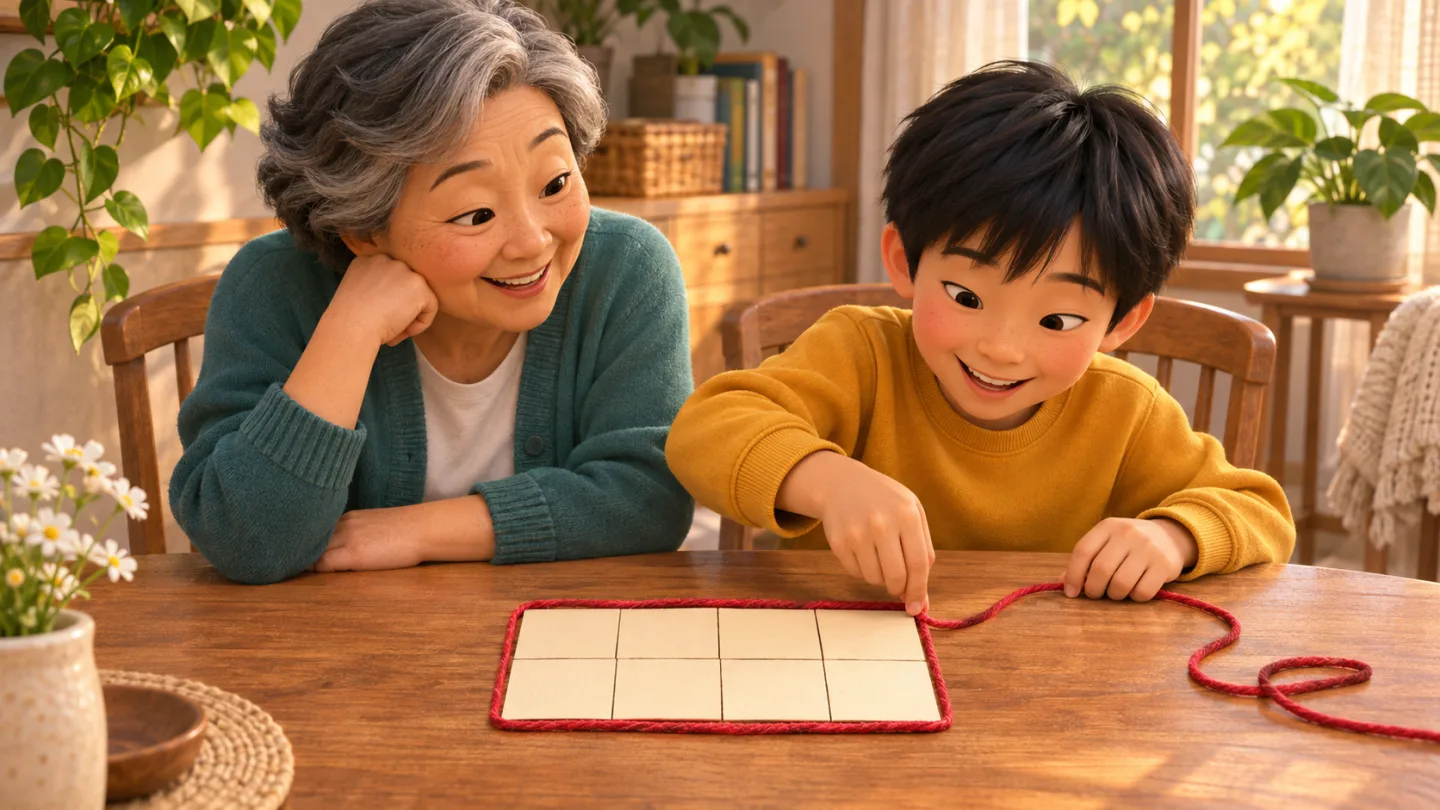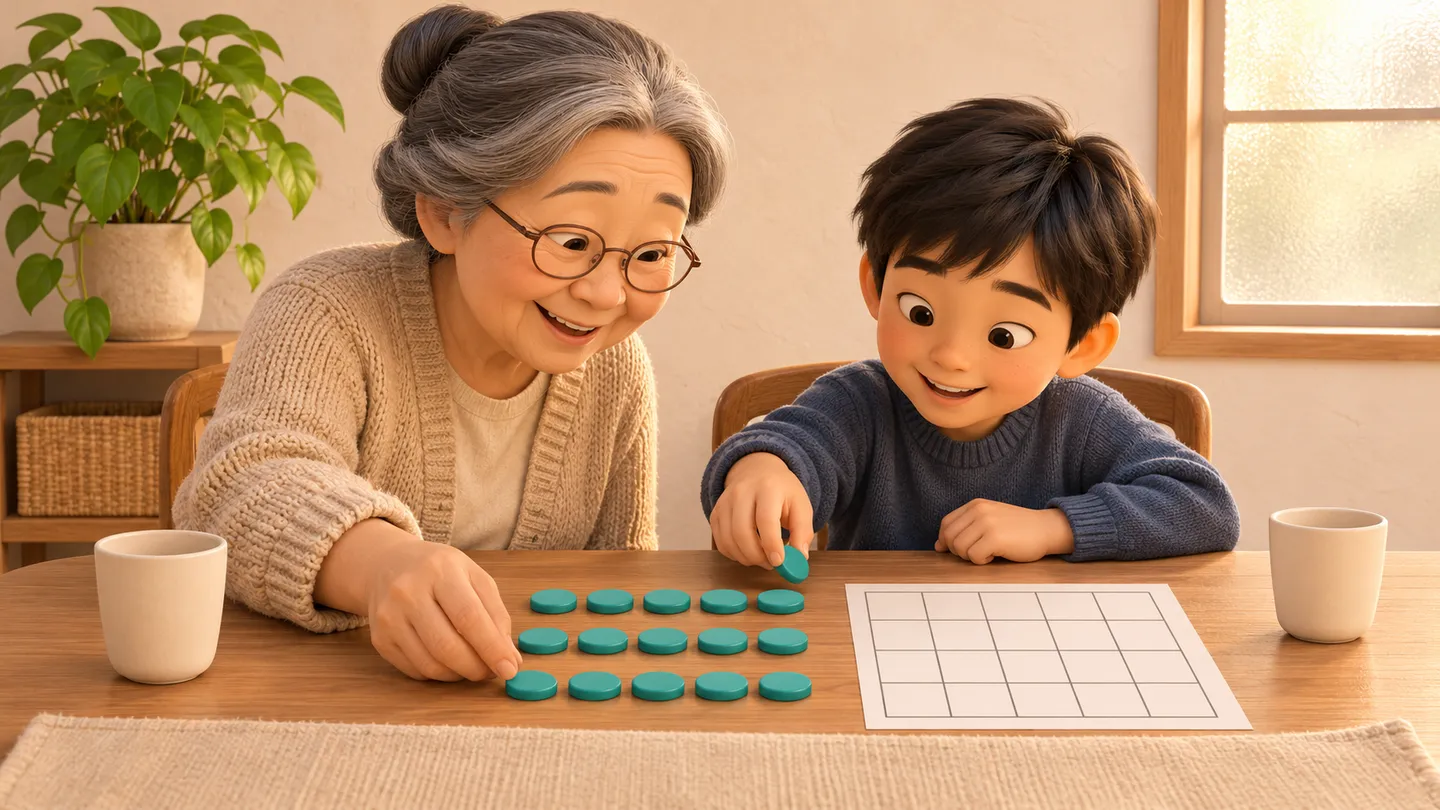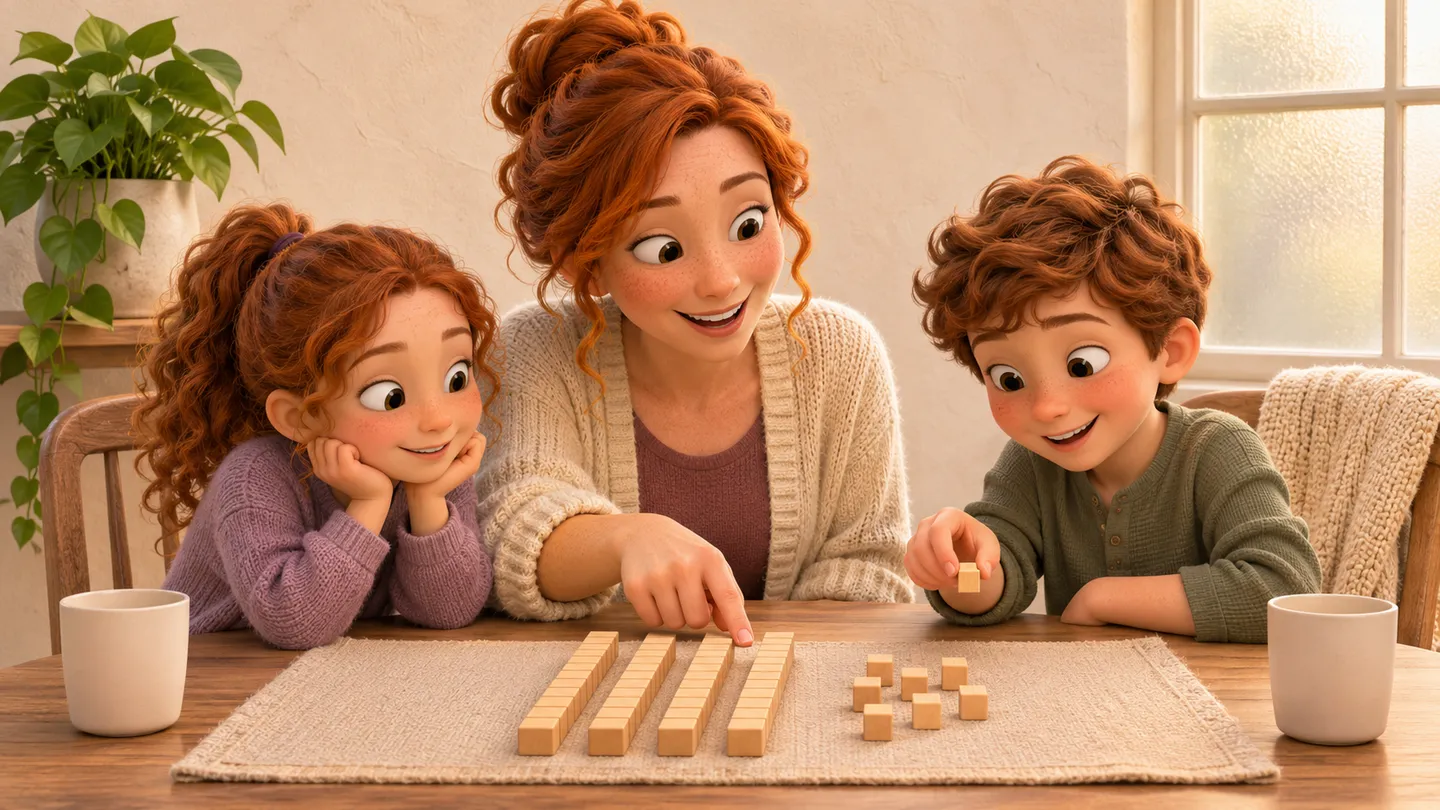

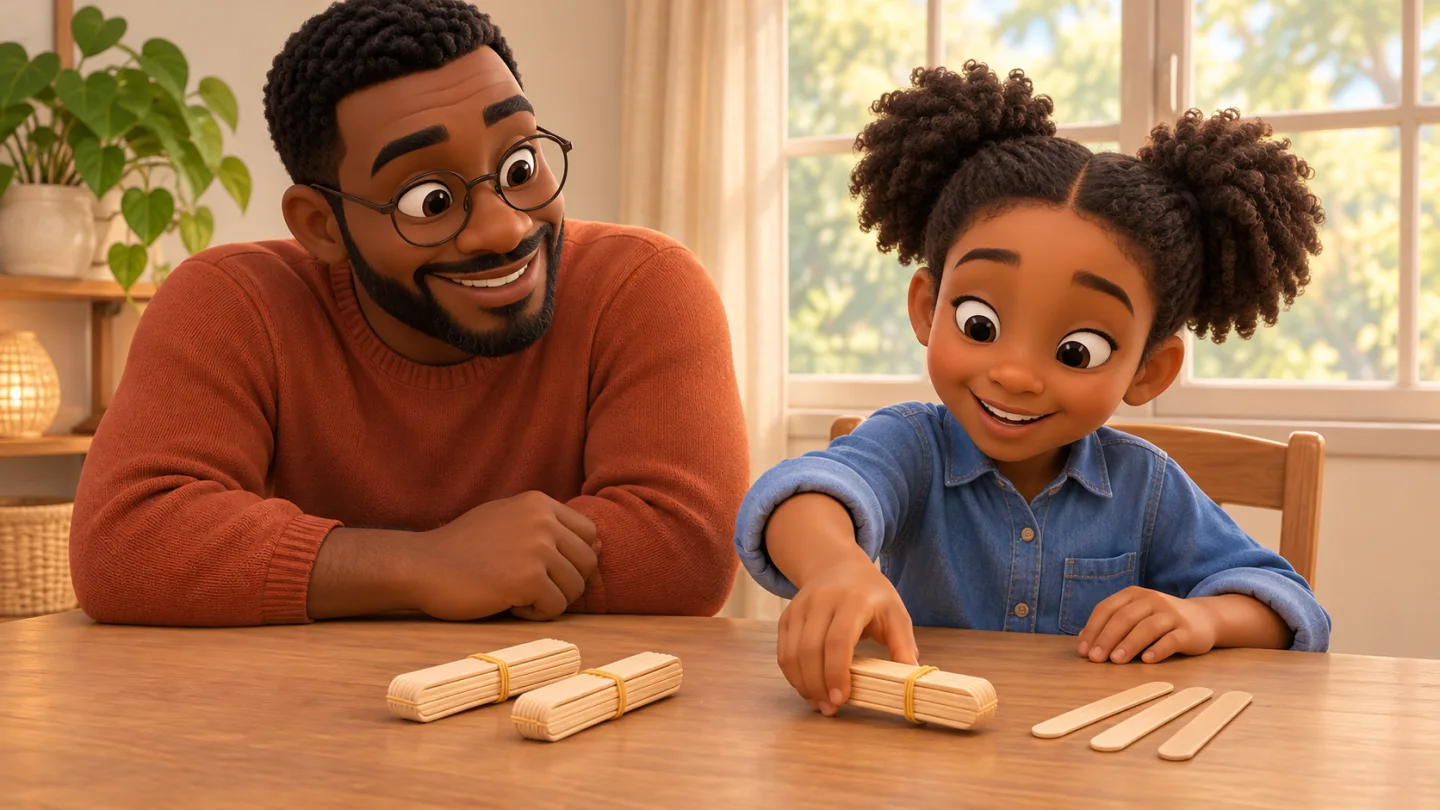
To teach place value at home, build a number with groups of ten. 304 has three hundreds, zero tens and four ones in a place value chart. In expanded form, it is 300 + 4. The zero holds the tens place. Take it out and you get 34, where the 3 is worth 30 instead of 300. With some scrap paper and a few craft sticks, your child can show you why.
Make a place value chart with household supplies
Draw three columns and label them hundreds, tens and ones, from left to right. Use a loose craft stick for one and tie ten together to make a bundle of ten. If you run out of sticks, use sketches: a mark for one, a strip for ten and a box for a hundred. Label each kind of sketch and show that a box stands for ten strips. The Ontario elementary mathematics curriculum includes building and breaking apart whole numbers using a variety of tools and strategies.
Start with 24. Put two bundles and four loose sticks in the matching columns. Ask, “If I untie one bundle, how many sticks will I have altogether?” You will have one bundle and fourteen loose sticks, which still makes 24. Let your child count to check, then tie the bundle back up. When we write the number in its usual form, each place holds a single digit.
Now build 304. Put three drawings of boxes in the left column and four loose sticks in the right column. Leave the middle column empty, then write the digits below the materials:
| Hundreds | Tens | Ones |
|---|---|---|
| 3 | 0 | 4 |
Point to each column and ask, “What digit do you see?” Then ask, “What is it worth in this spot?” In 304, the hundreds digit is 3 and its value is 300. If your child writes 34, ask them to build that number too. The four loose sticks stay where they are, but you replace the three boxes with three bundles of ten.
Play the warehouse game: fix the label
Pretend you are packing an order for 206 stickers. Draw two boxes of 100 and six loose stickers. Write 260 on a scrap of paper as the shipping label. Ask your child to check whether the label matches what is on the table.
- Show me what went wrong. In 260, the 6 stands for six packs of ten. Your six stickers are loose, so they belong in the ones column.
- Fix the label. Write 206. Ask your child to point to the empty column and explain why its digit is zero.
- Change the order. Add one pack of ten without opening any boxes. The new label is 216. The 1 goes in the tens column; the six ones stay in place.
Switch roles. Let your child write a label that does not match the order. Build what their label actually says, then ask them to change the picture or the label to recover their original order. If three columns feel like too much, use tens and ones and compare 16 with 61.
The tens digit and the total number of tens
The tens digit in 304 is 0. You can still make groups of ten from the whole number. If you open all three boxes of 100, you get 30 full groups of ten and four loose ones. Both answers are right because they answer different questions.
Try that distinction with 124 first. The 2 shows two tens in the chart. Open the box of 100 and add its ten bundles to the two already on the table. Now you can see twelve tens and four ones. The label still says 124.
Five place value questions to try before checking
- In 252, what is the first 2 worth? What about the last 2?
- Write the number with four hundreds, no tens and seven ones.
- Write 590 in expanded form. Explain what the zero tells you.
- Use 2, 0 and 8 to make two three-digit numbers that start with 2. Which is greater? How can you tell?
- In 362, what is the tens digit? How many full groups of ten can you make altogether, and how many ones are left over?
Answer key
- The first 2 is worth 200; the last one is worth 2.
- 407, because 400 + 7 is 407.
- 500 + 90. The zero tells you there are no loose ones in the chart.
- 208 and 280. They have the same number of hundreds. In the tens place, 280 has eight tens and 208 has zero.
- The tens digit is 6. If you open up the three hundreds, you get 36 groups of ten and 2 ones.
Finish with a fresh number, such as 703. Ask your child to write it, sketch it and explain the zero. If they put each digit in the right column but cannot say what it is worth, return to one column and ask what is inside each group. Once they can explain why opening a bundle keeps the total the same, try using that idea in subtraction with regrouping.