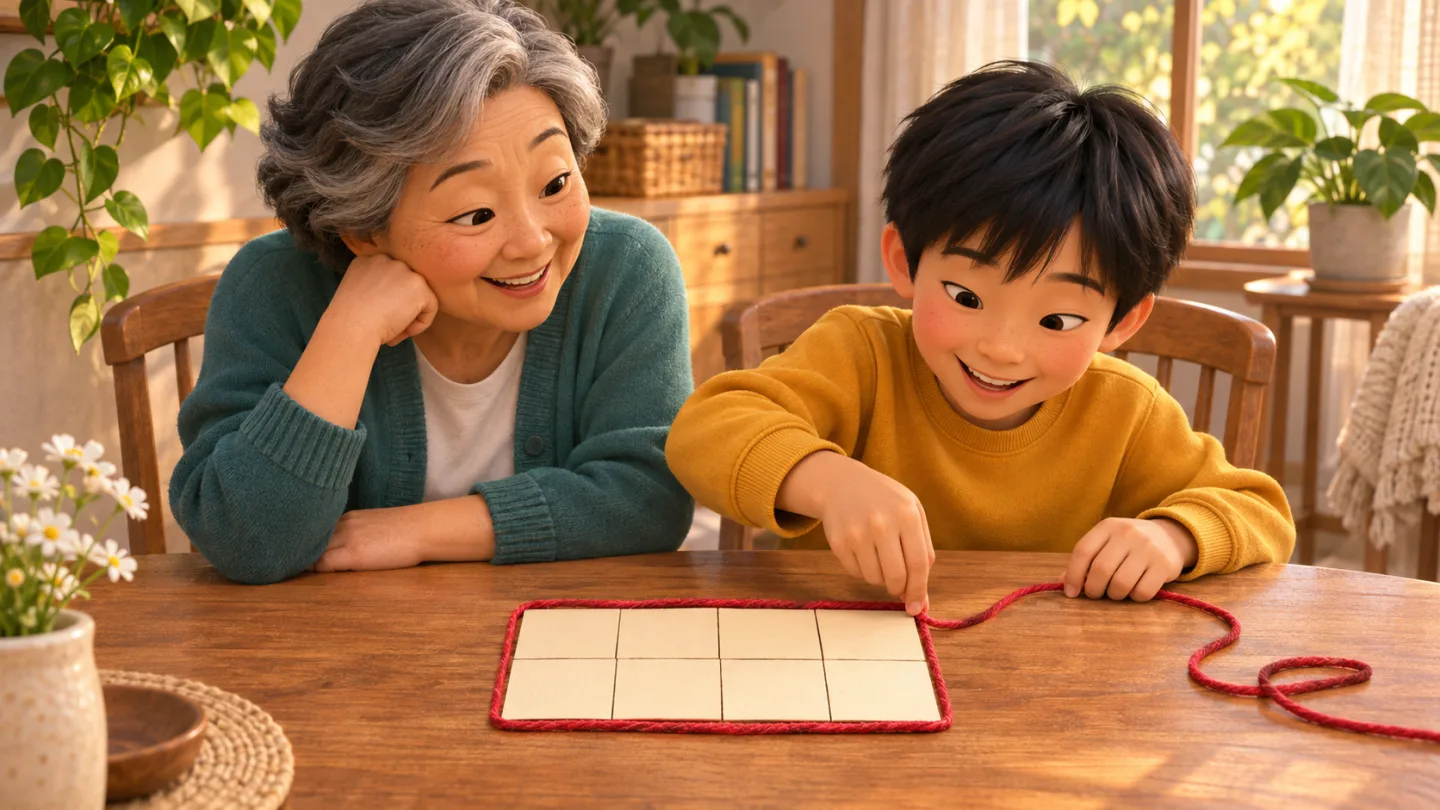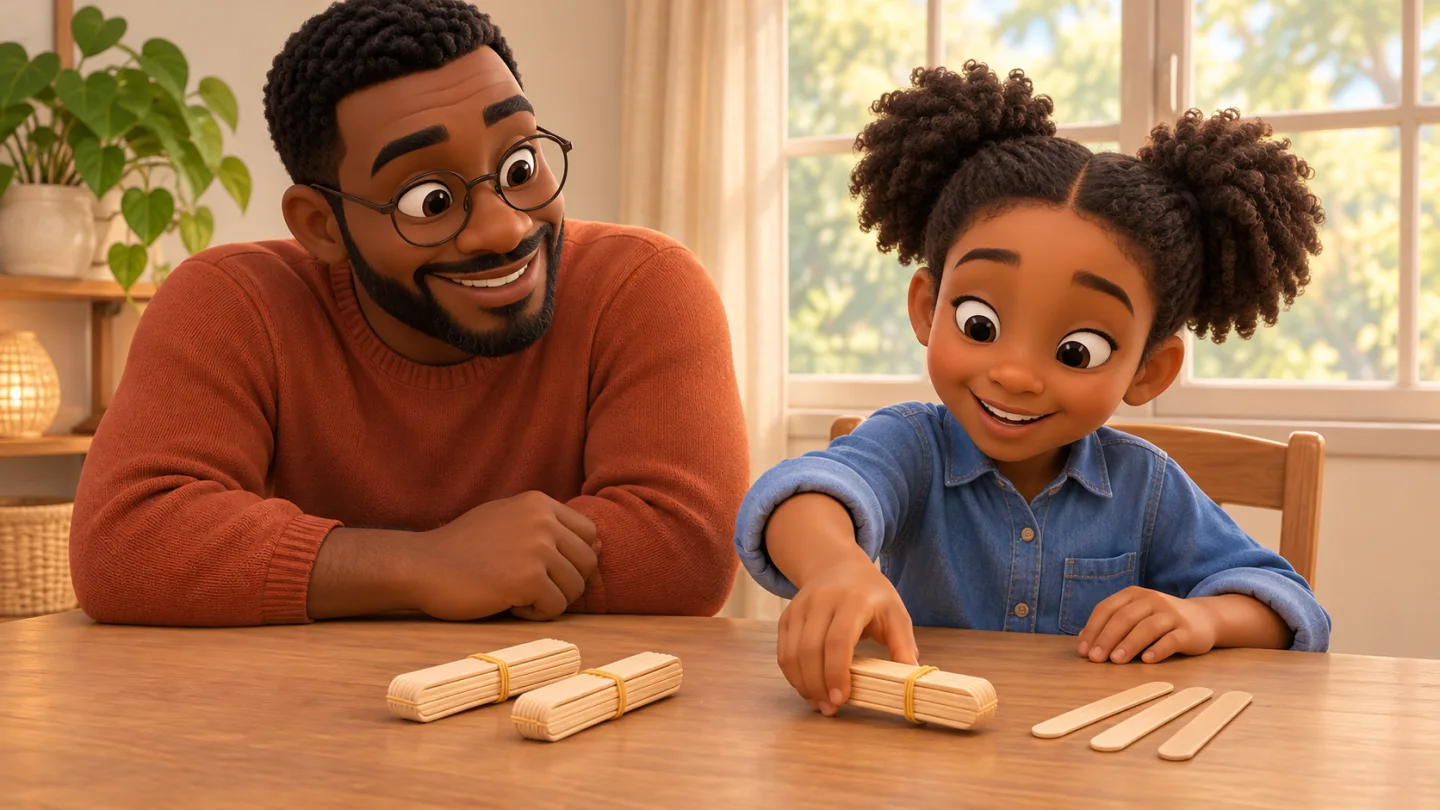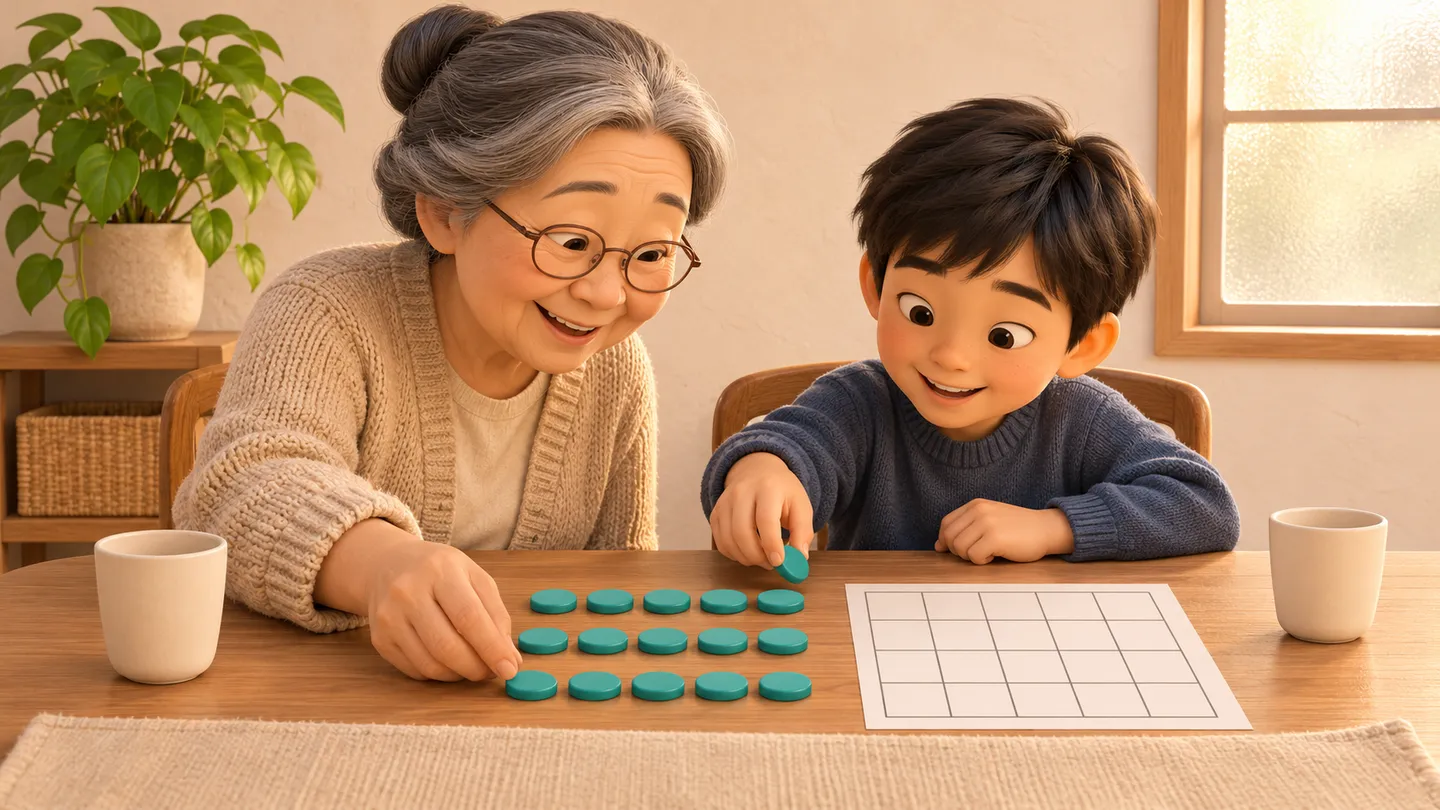

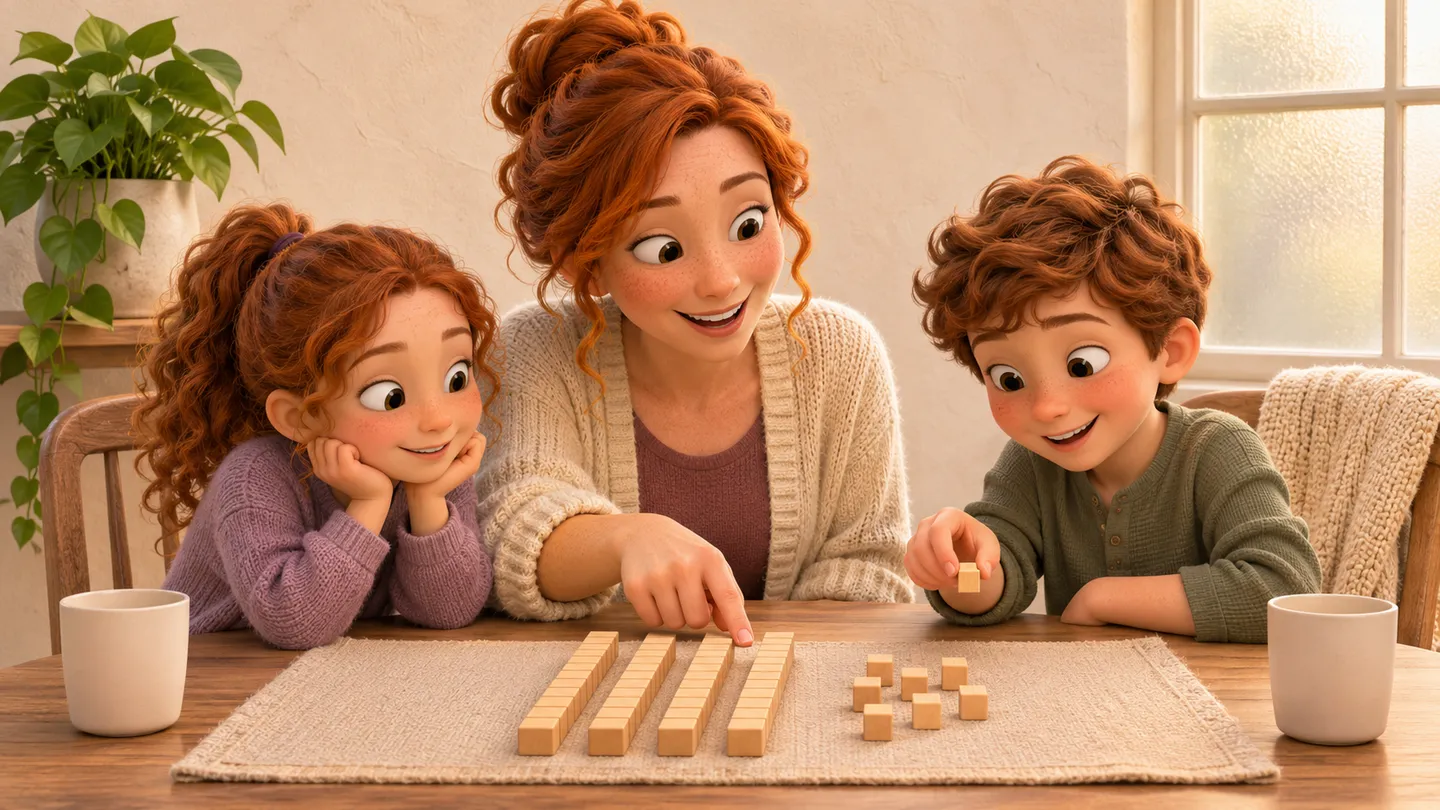
To explain subtraction with regrouping, show how one ten can be exchanged for ten ones. For 52 − 28, represent 52 as five tens and two ones. Exchange one ten to make four tens and twelve ones. Take away two tens and eight ones. You are left with 24. The exchange changes how you group 52 while keeping its value the same.
Ready to practise? Jump to the five subtraction problems. The answers show which groups to exchange, with one problem that needs no regrouping for comparison.
Make the exchange with objects
Bundle sticks or straws in groups of ten. Put five bundles and two loose sticks on a table. Ask your child to count the tens and ones and write 52. To remove eight loose sticks, open one bundle. Ask how many bundles and loose sticks you have now. Say the value together: four tens and twelve ones still make fifty-two.
Remove eight loose sticks and two bundles. Two bundles and four loose sticks remain. If you have no objects handy, draw five bars and two dots. Cross out a bar and draw ten more dots. Then cross out the amount you are subtracting. The Institute of Education Sciences elementary math guide explains how visual and concrete representations can help children connect quantities to mathematical symbols.
Connect the picture to written subtraction
Write 52 above 28, with the ones lined up on the right and the tens lined up on the left. Start with the ones. For this written method, there are two ones and you need to remove eight ones. Exchange one ten. The 5 in the tens column becomes 4, and the 2 in the ones column becomes 12. Now you can subtract 12 − 8 = 4 and then 4 − 2 = 2 tens.
Ask your child to point to the part of the drawing that matches each number. The 4 above the tens column stands for four tens. The 12 above the ones stands for twelve ones. Have them add 28 + 24 to check that the answer takes them back to 52.
Three mistakes you can talk through
- Subtracting the smaller digit from the larger digit. An answer of 36 for 52 − 28 may come from doing 8 − 2 and 5 − 2. Go back to the story of the calculation. You start with 52 and take away 28. Ask your child to show which eight ones they are taking away.
- Adding ten ones while keeping all five tens. Five tens and twelve ones would total 62. Count the original amount and the exchanged amount together. The opened bundle supplies the extra ones and leaves the tens column.
- Regrouping every time. In 58 − 24, there are eight ones and you remove four. The answer is 34. Compare this with 52 − 28 and ask what changes when you start with just two ones.
What if there is a zero?
Once your child can explain an exchange with two digits, try 300 − 126. Start with three hundreds. Exchange one hundred for ten tens. You now have two hundreds and ten tens. Next, exchange one of the tens for ten ones. The amount is still 300, shown as two hundreds, nine tens and ten ones. Remove one hundred, two tens and six ones. You have 174 left.
If it gets hard to follow the two exchanges, give hundreds, tens and ones their own space on the table. Write the new quantities after each exchange. You can go back to a two-digit example and try the zero later.
Practice and answers
- 43 − 17. Exchange one ten. Three tens and thirteen ones minus one ten and seven ones leave 26.
- 76 − 32. There is no exchange. Four tens and four ones remain, or 44.
- 81 − 46. Seven tens and eleven ones minus four tens and six ones leave 35.
- 204 − 87. After two exchanges, you have one hundred, nine tens and fourteen ones. Take away eight tens and seven ones to get 117.
- You have 62 sheets of paper and use 37. You have 25 sheets left. Check by adding 37 and 25.
Check whether the answer is reasonable
Before finishing, ask roughly what answer you expect. In 52 − 28, you take away a little less than 30 from a little more than 50. The answer should be a little more than 20. If your child gets 44, the estimate gives them a reason to revisit the steps. Then add the exact answer to the amount taken away. Estimating and checking by addition give your child two different ways to review their work.
When your child finishes a problem, ask them to show exactly where the extra ones came from. They can circle the new ones on the drawing and point to the ten that disappeared. If they can explain both changes, try the same calculation without the drawing.
Start with two problems, including one that needs no exchange. On another day, give your child a different example and ask them to draw just the exchange. If the main challenge is deciding what operation a story calls for, see how to choose an operation in word problems.