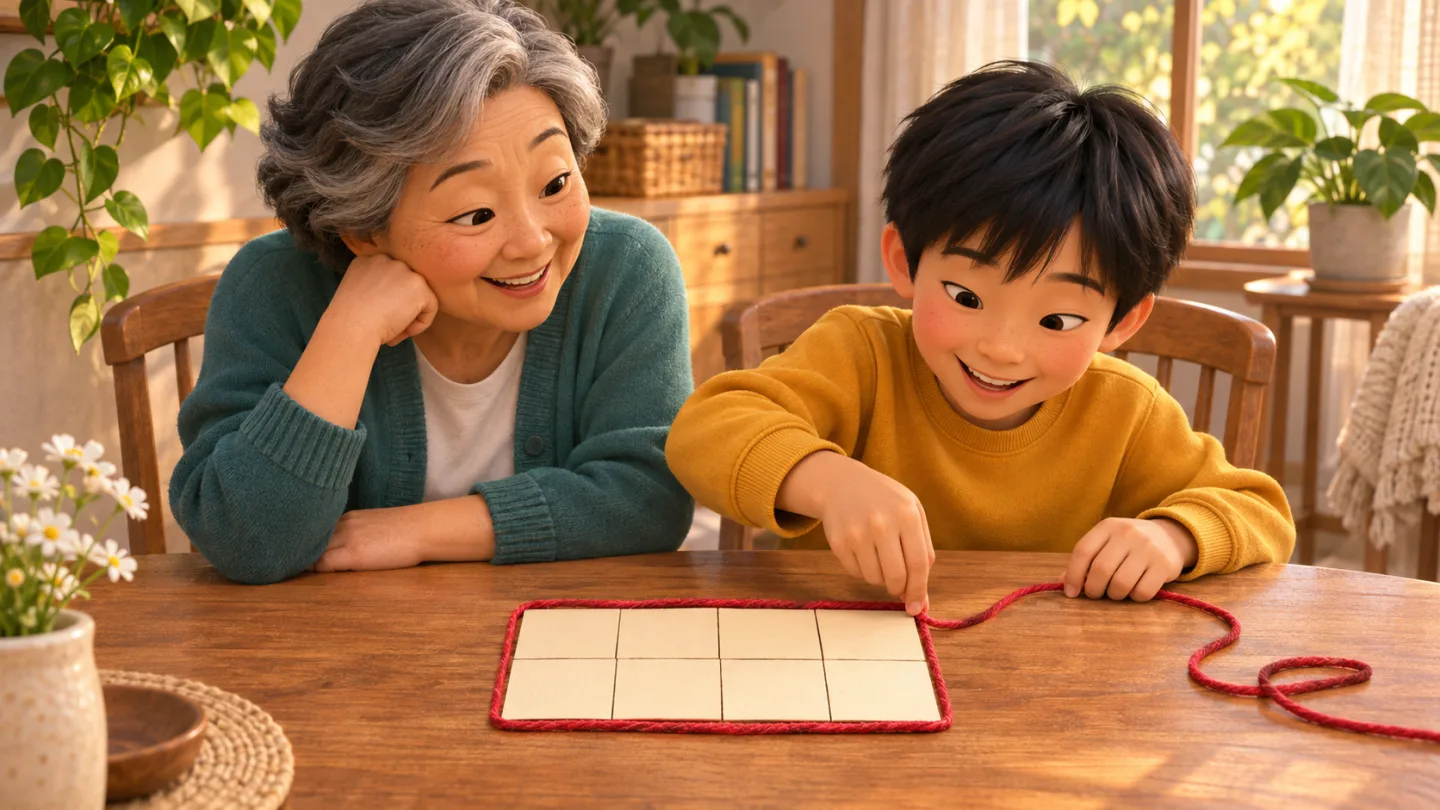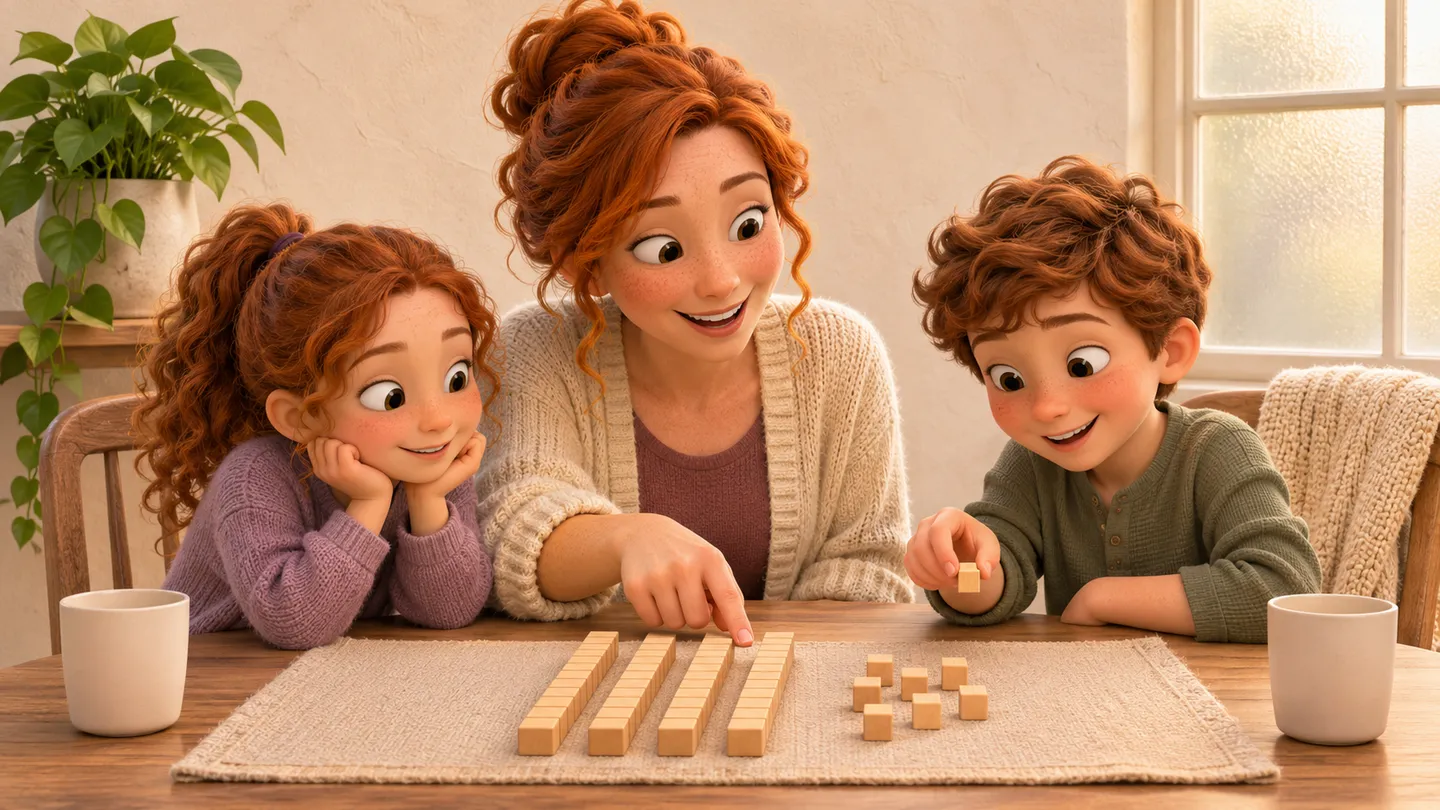

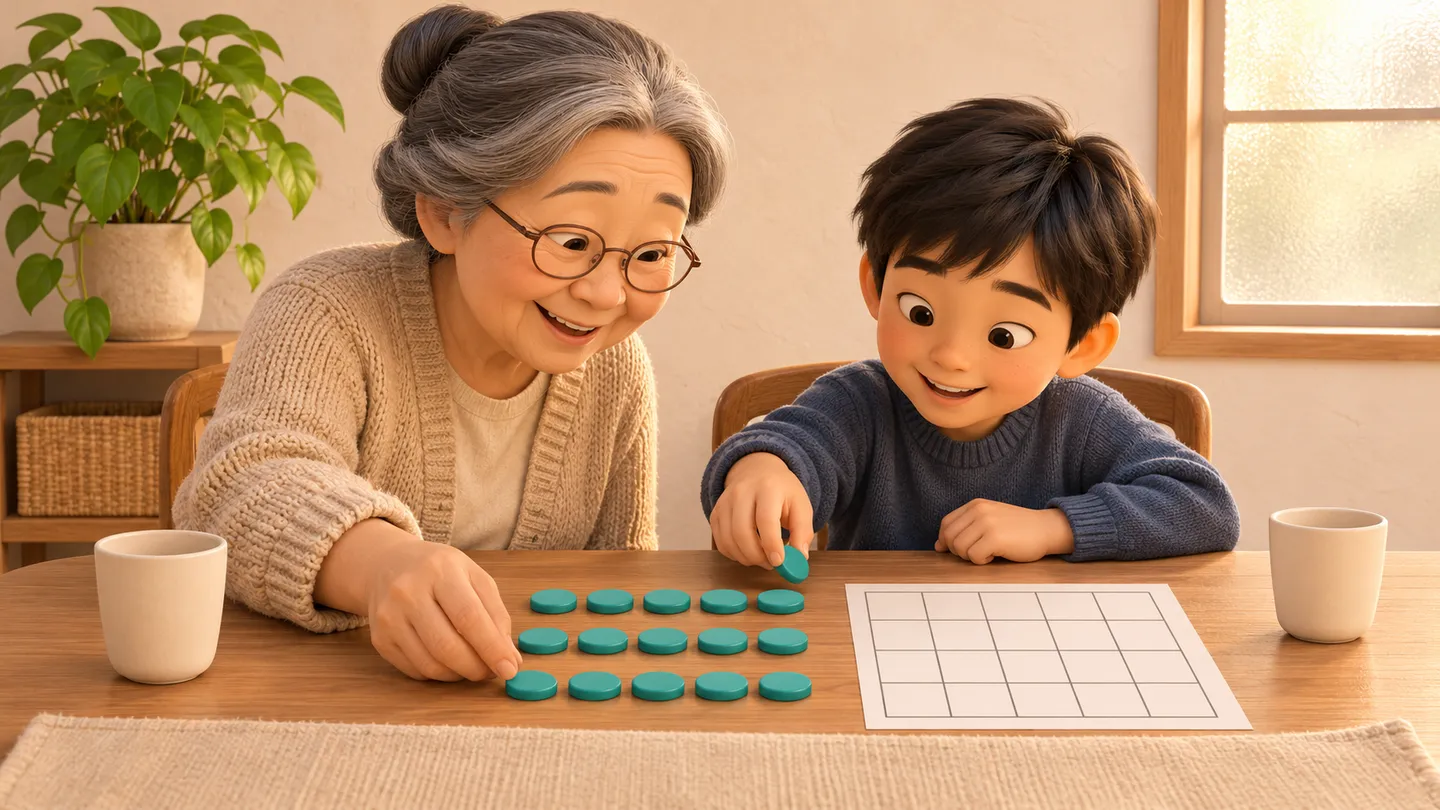
Download the printable 1–12 multiplication chart. The three-page PDF includes a completed chart, a blank chart with short exercises and an answer page. Print the page you need, then choose a single row or a small group of facts for the session.
How to read a multiplication chart
Find one factor on the left side and the other across the top. The cell where the row and column meet shows their product. For 6 × 7, follow the row for 6 and the column for 7 until they cross. The answer is 42. Two strips of paper can help your child keep track of the row and column without losing their place.
Start with 2 × 4 if the full grid feels busy. After finding 8, ask your child to make two groups of four counters. Count the counters and match the total to the chart. The Institute of Education Sciences guide to elementary mathematics recommends using concrete and visual representations to connect mathematical ideas to symbols. A grid and a handful of objects give you two ways to show the same fact.
Which page should we use?
- Page 1, completed chart. Use it to show how the grid works or to check a product after your child has tried it.
- Page 2, blank chart and exercises. Pick a handful of cells or one row. The short questions include products, a missing factor and a word problem.
- Page 3, answer key. Compare the short exercise answers and discuss one mistake. The chart on the first page also gives the answer to every blank cell.
The pages are letter size and readable in black and white. You can keep the completed chart in a clear sleeve and print a separate copy of the blank grid when you want to write on it. If your child is working on the twos through fives in class, fold the page so those rows are visible. The other rows will be there when you need them.
Use a known fact to find a missing one
Suppose your child is trying to find 7 × 8. Ask them what they already know about the eights. They may know 5 × 8 = 40 and 2 × 8 = 16. Five groups of eight and two more groups of eight make seven groups. Add 40 and 16 to get 56, then check the chart.
Next, compare 7 × 8 and 8 × 7. Both cells say 56. Arrange counters in seven rows of eight, then look at the arrangement from the side. You can count eight columns of seven without moving any counters. When the same pair of factors appears in the opposite order, your child can recall this picture.
Three short ways to practise
First session. Choose three facts in the same row. Find each answer on the completed chart and draw one fact. Cover one product at the end and ask your child how they could work it out again. Let them show you a drawing, count groups or build from a known fact.
Second session. Try two facts on the blank chart and add a missing-factor question. For 5 × □ = 35, look for 35 in the row for 5, then follow the column up to 7. Read the complete equation aloud and check it by counting in fives.
Third session. Tell a short story: “There are six boxes of four pencils. How many pencils are there?” Ask what 6 and 4 each stand for. Your child can sketch the boxes, write 6 × 4 and check 24. If they answer 10, ask them to show the boxes and the pencils separately and count the total number of pencils.
Correct one error at a time
When a cell is wrong, start by checking which factors your child used. If they followed the wrong row, show how to track the two headings. If they wrote 35 for 6 × 7, begin with 5 × 7 = 35 and add one more group of seven. If they wrote 13, ask them to draw what 6 + 7 shows, then make a drawing for six groups of seven.
Make a reference strip for one table
Mark the row you are working on with a light pencil line. Start by filling the products your child already knows. Put a dot beside two cells they want to revisit. After they find a missing product, ask them to show how they worked it out. They might skip-count, start from a double or add another group. Keep that same row for the next session so your child can show you whether they would use the same strategy again.
Bring back the missed fact at the start of another session and finish with one your child can explain. You can leave the rest of the page blank. For practice without a printed sheet, try the activities in how to help your child learn times tables.